
I simply adore nature as well as fantastical creatures and have created a short mockumentary about what it would be like to study such creatures. I really enjoyed the process, though it took way too long to make! I hope you enjoy it, dear reader. Below you may briefly meet my mythological friends. You may view the little film here if you’d like to get to know them a little better.
North America is home to a number of geographically specialized members of the gryphem family.
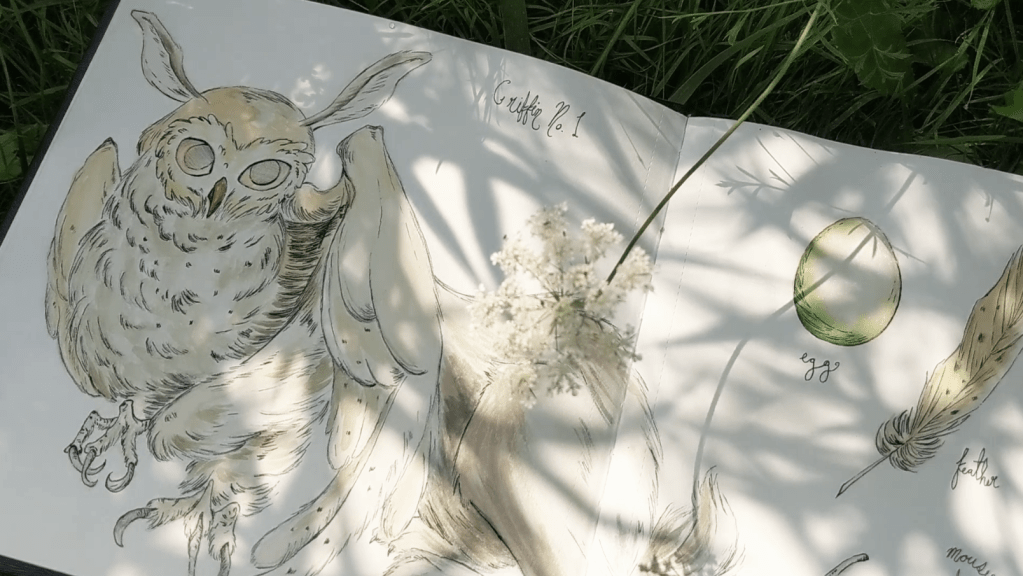
In the wide and fragrant meadows resides the smallest of today’s study, gryphem noctua lepus. At no larger than three quarters of a metre in length, and wrapped in the earthy hues of its habitat, it is often hard to spot. This creature can move quickly and soundlessly through the landscape, making it both difficult for prey to avoid and for predators to find. It is often both a help and a hinderance to farmers, as a warren can clear an area not only of pests but of crops. It occupies a unique niche in its ecosystem, playing the role of both the hunter and the hunted.
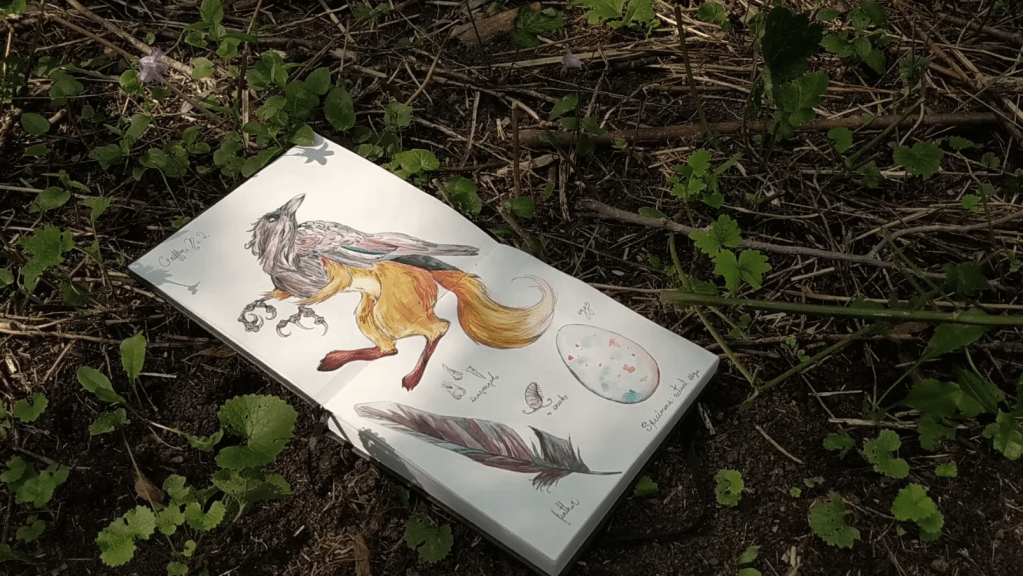
The gryphem corvus vulpes thrives in an entirely different environment. Though it is sometimes spotted in more populated areas, it thrives in the deep forest where there is plenty of cover. It is highly adaptable and makes its den in anything from a hollow tree to a nook in the metamorphosed rock of the Canadian Sheild. Primarily nocturnal and omnivorous, the gryphem corvus vulpes will feast on anything from small animals, to eggs, to foraged berries. This subspecies does not intentionally seek out human interaction but has been known to approach evidence of our activity with a sort of fascination, collecting objects dropped by hikers and interfering with equipment left by peaceful explorers and destructive developers alike.
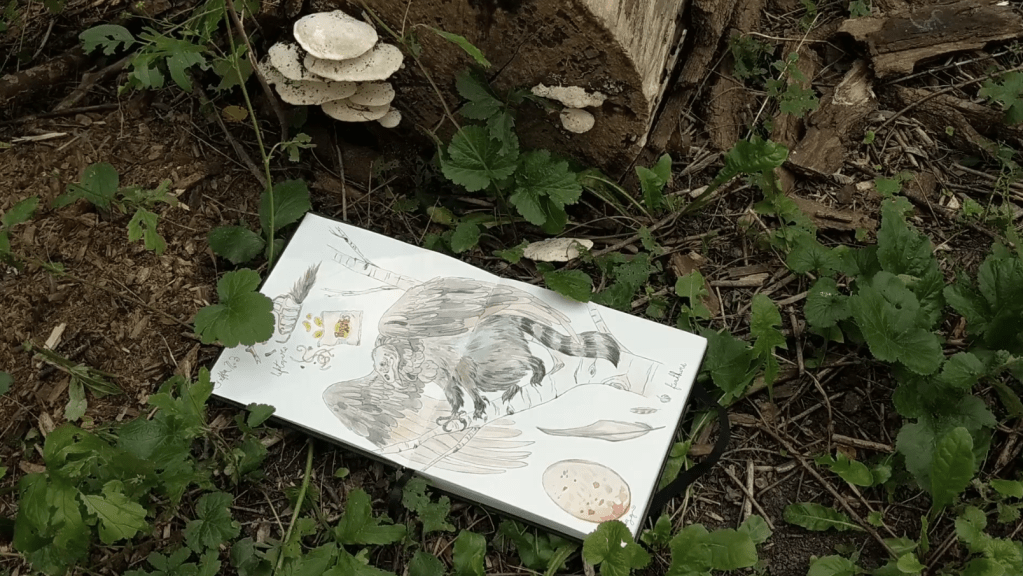
Perhaps the most commonly encountered of these rare creatures is the gryphem vulturis procyon lotor. This particularly practical griffin differs greatly in spirit from its peers through its fearless and easygoing nature that allows it not only to survive in the midst of humans but to thrive. The gryphem vulturis procyon lotor is not a hunter and will instead scavenge for its supper. It enjoys human castaways as much as its natural diet of carrion. It is often a gentle creature and is unafraid of human activity but it can be a vicious adversary when its young are threatened.

The final subject of today’s study is the gryphem gavia immer lupus. The habitat of this griffin differs greatly from the former animals as it requires an aquatic ecosystem to truly thrive. It feeds on a rich carnivorous diet, of primarily fish and small mammals. The gryphem gavis immer lupus can be considered amphibious as, though it spends most of its time in and under water, it makes its den on land. You may have heard the haunting howl of this creature in the past, an unknowable vibrating echo in the darkness on an early autumn night. Take comfort in the fact that although this timid creature is by no means undangerous, it largely gives humans a wide berth and will never actively seek them out.
There are many organisms worthy of study, no matter your habitat. I heartily encourage you to seek them out and admire their beauty.
 from the library of Mrs. Moon